
 English
 Pусский
How to Choose a Cosmetic Powder Mixer Based on Production Capacity: A Complete Guide
Time: Oct 16, 2026
Content
When a production manager at a mid-sized OEM facility plans to scale up a pressed powder line from 500 kg to 2,000 kg per shift, the first question is rarely about blade speed or motor power. It is about batch volume and cycle time. Choosing a cosmetic powder mixer based on production capacity means matching the machine's working volume, mixing mechanism, and discharge efficiency to the facility's daily output target. A mismatch here can lead to either underutilized equipment or a bottleneck that stalls the entire line.
Understanding Production Capacity Requirements
Production capacity for cosmetic powder mixers is typically expressed in liters of working volume or kilograms per batch. The key metric is not the total tank volume but the usable working capacity, which is usually 60-80% of the total volume. For example, a 200-liter trough mixer may only handle a 140-kilogram batch of pressed powder base material. Overfilling reduces mixing uniformity and increases cycle time.
To determine your requirement, calculate the daily target output in kilograms, divide by the number of shifts and batches per shift, and then add a 20% safety margin for material handling inefficiencies. This figure is the minimum batch size your mixer must handle. If a single machine cannot meet the speed requirement, consider using two mixers in parallel or a larger unit with a shorter mixing cycle.
Core Concept: Working capacity is the actual amount of material a mixer can process per cycle. For most horizontal trough mixers, this is between 60% and 80% of the total tank volume. Always confirm this figure with the manufacturer before selecting a model.
Matching Mixer Type to Capacity Tier
Not all mixer designs scale linearly. Low-shear ribbon blenders and high-shear paddle mixers behave very differently when operated at 30% versus 90% of their working capacity.
Low to Medium Capacity
For batch sizes under 100 kilograms, a 50-liter or 100-liter high-shear powder mixer is typically sufficient. These units offer faster cycle times because the high-speed choppers reduce agglomeration quickly. They are ideal for R&D labs or small-batch production runs where formulation changes frequently. The 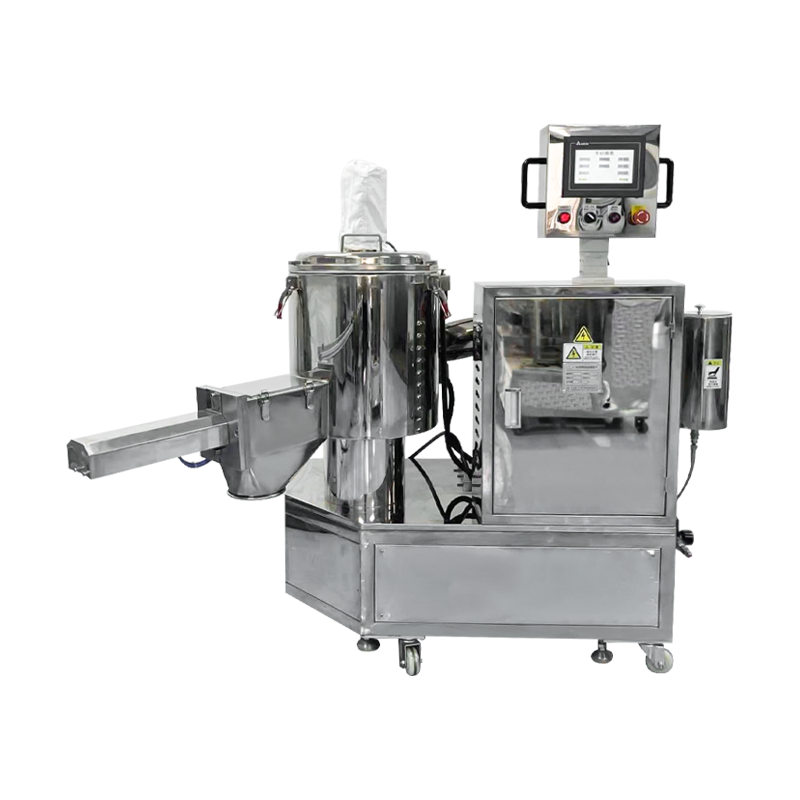 50L High Shear Powder Mixer Machine with Oil Spraying System For CosmeticThis cosmetic powder processing machine is designed for mixing, pulverizing and homogenizing powder materials for pressed powder, loose powder, eyeshadow, blush and ot...View Product → is a common choice for pilot batches and limited product lines.
Medium to High Capacity
When batch sizes exceed 200 kilograms, a 200-liter or 300-liter trough mixer becomes more economical. These machines provide a larger blending zone and can maintain consistency across the full batch. The triple-chopper system in the 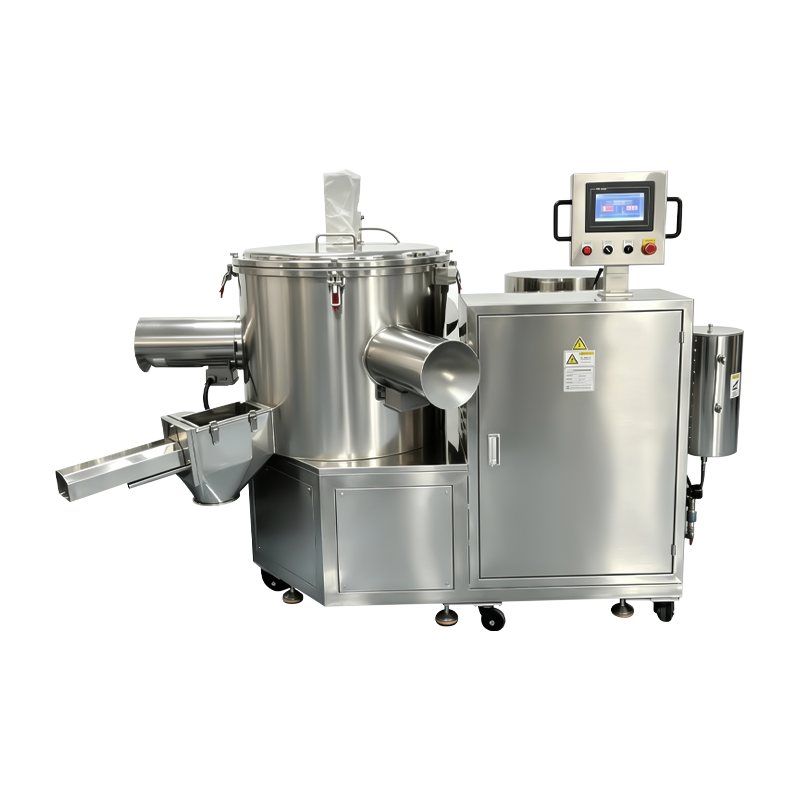 200L Industrial High Shear Cosmetic Powder Mixer with Triple ChopperThe 200L 3-axis side-beating high-speed powder mixer is a large-capacity processing equipment for cosmetic powders, designed for the batch mixing, pulverizing and homo...View Product → ensures that even high-viscosity powder blends are processed uniformly in under 10 minutes.
A common mistake is selecting a mixer with excessive capacity 'just in case.' This often leads to longer residence times, higher energy consumption, and inconsistent color dispersion because the machine is operating below its optimal fill level. Stick to the capacity tier that matches 70-90% of your average batch size.
Key Decision Factor: For a line targeting 1,000 kg per shift with 4 batches, each batch must be at least 250 kg. A 300-liter mixer with 80% working capacity can handle approximately 210-240 kg per cycle, making it a borderline fit. In this case, a larger unit or two mixers in sequence may be necessary.
Evaluating Mixing Uniformity at Scale
Capacity is useless if the mixer cannot achieve the required homogeneity within the available cycle time. For cosmetic powders, the standard is often a coefficient of variation below 5% for active ingredients and pigments. Larger mixers typically require longer mixing times at low speeds to avoid shear-induced separation of fine and coarse particles.
| Mixer Size (Liters) | Working Capacity (kg) | Typical Cycle Time (minutes) | Recommended RPM Range | Max Pigment Loading (%) |
| 50 | 30-40 | 4-6 | 200-600 | 15 |
| 100 | 60-80 | 6-8 | 180-500 | 12 |
| 200 | 120-160 | 8-12 | 150-400 | 10 |
| 300 | 180-240 | 10-15 | 120-350 | 8 |
As the table shows, cycle time increases with capacity. A 300-liter mixer may need nearly double the time of a 100-liter unit to reach the same uniformity standard. This is critical when planning production schedules. If your line demands a throughput of 1,200 kg in an 8-hour shift, a 100-liter mixer operating at 70 kg per batch would require 18 cycles, which might exceed the available time. In contrast, a 200-liter mixer would need only 9 cycles, fitting comfortably into the shift.
Technical Insight: For high-pigment formulations, using a 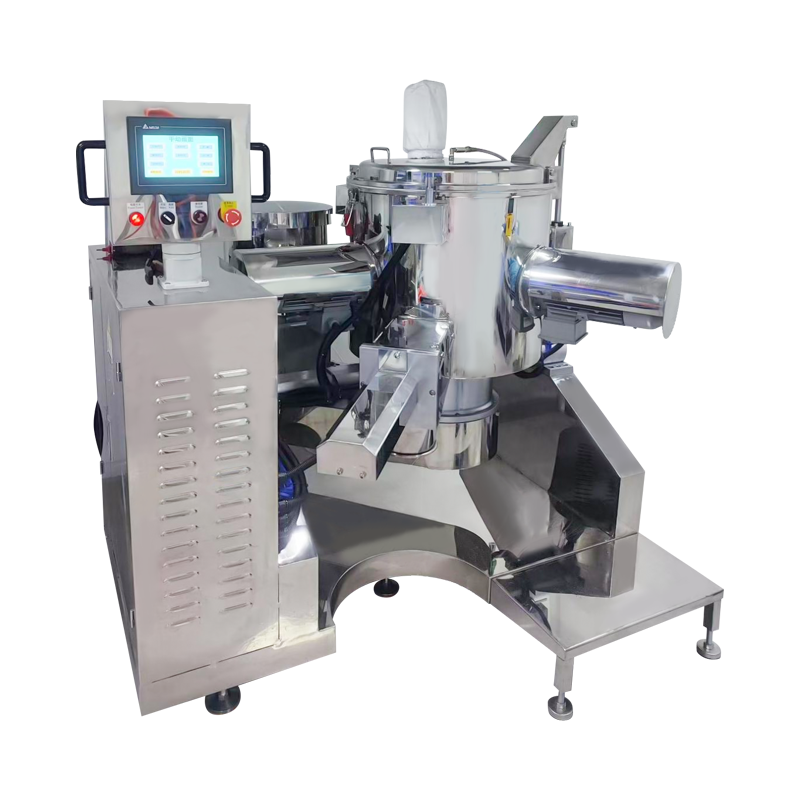 100L Triple-Chopper High Speed Powder Mixer Machine with Oil Spraying SystemThe 100L 3-axis side-beating high-speed powder mixer is a processing equipment for mixing and pulverizing cosmetic powders, designed for the batch processing of presse...View Product → at 480 RPM for 7 minutes typically achieves a CoV of 3.2%, which is well within the cosmetic standard. Testing at the intended capacity level is essential before committing to a full-scale purchase.
Bottleneck Prevention and Discharge Speed
A mixer is often the heart of a powder production line, but its discharge mechanism can become a bottleneck if not matched to the capacity. Gravity discharge through a bottom valve is standard for trough mixers, but the opening size and valve type must allow the full batch to be emptied in under 90 seconds. Screw discharge systems can handle larger volumes but add cost and cleaning complexity.
For high-capacity lines (above 200 kg per batch), pneumatic or hydraulic discharge systems are recommended to avoid operator fatigue and inconsistent dump times. The discharge height should also align with the downstream equipment, whether it is a conveyor, a compacting press, or a storage hopper. Misalignment here adds 5-10 minutes of manual handling per batch, which accumulates into a significant throughput loss across a shift.
Practical Tip: When evaluating a 100-liter horizontal trough mixer, confirm that the discharge gate width is at least one-third of the trough diameter. This ensures that even slightly sticky powder blends flow out freely without bridging.
Energy and Footprint Considerations
Larger mixers require more floor space and higher electrical loads. A 300-liter high-shear mixer typically consumes 15-25 kW per cycle, compared to 5-10 kW for a 100-liter unit. This affects both the electrical infrastructure of the facility and the per-kilogram energy cost of production. For a facility running two 8-hour shifts, the energy cost difference between a 100-liter and a 300-liter mixer can be substantial enough to influence the total cost of ownership.
Data Point: A 200-liter mixer operating at 380V and 50 Hz with a motor power of 18.5 kW and a cycle time of 10 minutes per batch (including loading and discharge) processes approximately 120 kg per batch. At full capacity over 16 hours, this yields around 1,440 kg per day at an electrical cost of roughly $18-25, depending on local rates.
Reliability and Maintenance at Scale
Higher production capacity places greater mechanical stress on seals, bearings, and discharge valves. A mixer that runs 20 cycles per day will require more frequent seal replacements and lubrication than one running 5 cycles. This is especially true for mixers with chopper blades, which operate at high RPM and generate localized heat. When selecting a mixer for a high-capacity line, ask for the manufacturer's maintenance schedule and parts replacement intervals. Machines with modular seal cartridges are easier to service without removing the entire shaft assembly.
The company's advertised 10-plus years of engineering experience and its focus on automation suggest that its mixers are designed for continuous operation. When scaling up, verify that the lubrication system is centralized and that spare parts are readily available for high-wear components such as chopper blades, shaft seals, and discharge valves.
Maintenance Insight: For a line producing 2,000 kg per day, choose a mixer with a double mechanical seal on the main shaft and a replaceable wear liner in the trough. This design significantly extends service life compared to standard packing seals.
Cost-Per-Kilogram Analysis
The final factor in choosing a cosmetic powder mixer based on capacity is the cost-per-kilogram analysis. A 100-liter mixer priced at $8,000 processing 70 kg per batch for 10 batches per day gives a cost per kilogram of $0.014 over a 560-day period (assuming no downtime). A 300-liter mixer at $18,000 processing 210 kg per batch for 4 batches per day yields a cost per kilogram of $0.011 over the same period. While the larger machine has a higher upfront cost, its lower per-kilogram expense makes it more economical for sustained high-volume production.
However, this calculation must include maintenance, energy, and cleaning costs. A larger mixer also requires more cleaning solution and time during product changeovers. For facilities with frequent product switches, two smaller mixers may be more cost-effective than one large machine because one can be cleaned while the other is running.
Decision Framework: If your facility runs fewer than 5 formula changes per week, a single high-capacity mixer is usually better. If changes exceed 10 per week, consider multiple medium-capacity units to minimize downtime.
Frequently Asked Questions
What is the difference between working capacity and total volume in a powder mixer?
Working capacity is the actual volume of material that can be effectively mixed, typically 60-80% of the total tank volume. The remaining space allows for powder expansion and movement during mixing. Always use working capacity, not total volume, when sizing a mixer for your production line.
How do I calculate the batch size needed for my production capacity?
Divide the daily target output in kilograms by the number of shifts and batches per shift. Add a 20% safety margin for material handling inefficiencies. For example, if you need 1,200 kg per shift and plan 4 batches, each batch must be at least 375 kg including the safety margin (300 kg without it).
Can a large mixer be used for small batches?
It is not recommended. Operating a large mixer below 30% of its working capacity leads to uneven mixing, longer cycle times, and higher energy consumption per kilogram. It may also cause material to stick to the walls or collect in dead zones, reducing uniformity.
What maintenance issues are most common in high-capacity mixers?
Seal wear, bearing failure, and chopper blade erosion are the most frequent issues. High-capacity mixers running more than 20 cycles per day should have a preventative maintenance schedule that includes weekly grease lubrication and monthly seal inspections. Centralized lubrication systems reduce labor and improve reliability.
Recommended NEWS:
How Automation Improves Efficiency Across the Cosmetic Powder Production Process
How to Build an Efficient Production Line for Pressed Powder Cosmetics
How Cosmetic Powder Processing Machines Improve Powder Makeup Production
Powder Processing Challenges in Cosmetic Manufacturing and How to Address Them
How Fully Automatic Pan Loading Machines Improve Cosmetic Powder Pressing Lines
Cosmetic Powder Pulverizer Selection: The 7 Critical Factors to Consider
Related products
Copyright © Shanghai Qimeida Machinery Technology Co., Ltd. All Rights Reserved.
Custom Professional Cosmetic Machinery Manufacturers
