English
 Pусский
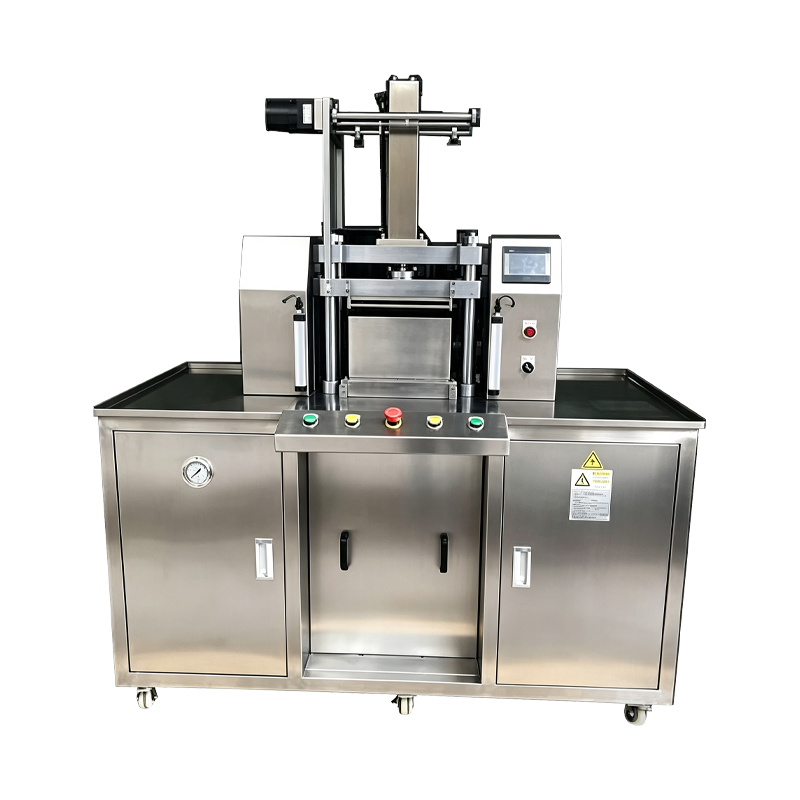
Pneumatic Cosmetic Powder Pressing Machine
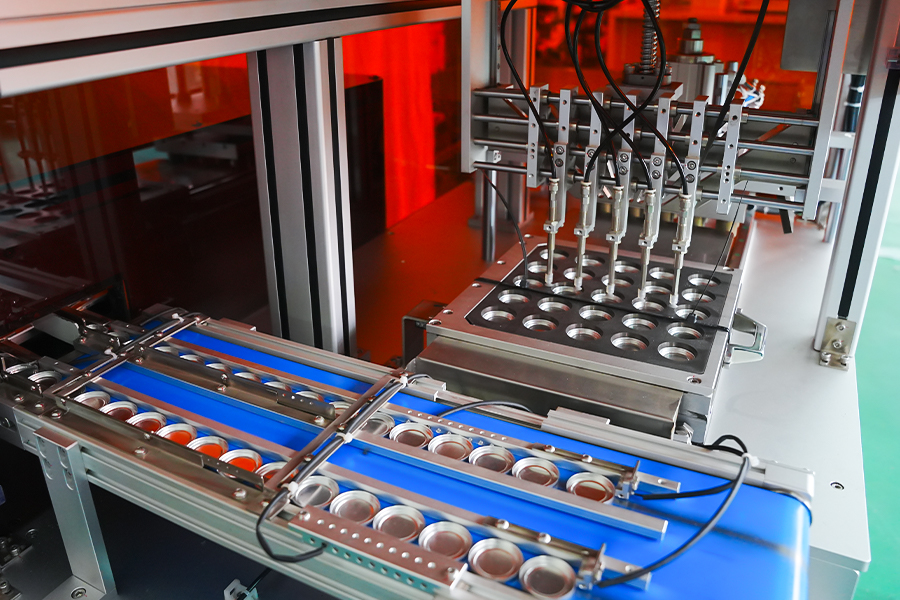
An air driven pressing platform for compacting loose cosmetic powder into solid pans and cakes. The pneumatic circuit applies force through a controlled cylinder stroke, giving fast cycle times and low thermal load on the powder. Applied to eyeshadow, blush, highlighter, and light powder foundation formats where short hold times and clean release are required.
Why Pneumatic Actuation
Process characteristics that determine where air driven pressing is applied in cosmetic production.
Short Cycle Time
The cylinder reaches working pressure within a short stroke interval, allowing higher cycle rates than hydraulic actuation on shallow pan formats.
Low Thermal Load
Air driven pressing introduces minimal heat into the die area, which suits formulations with low melting point binders or heat sensitive pigments.
Clean Release Behavior
Fast pressure release at the end of the stroke reduces suction between the upper punch and the powder surface, lowering sticking and pan pick up.
Simple Pressure Control
Force is set through a proportional air regulator, and the working pressure is displayed directly on the HMI for each recipe.
Reduced Maintenance Scope
Air circuit components require less frequent service than hydraulic equivalents, and there is no oil reservoir or oil temperature circuit to manage.
Line Integration Flexibility
Pneumatic units can be positioned close to upstream filling equipment without routing hydraulic lines across the production floor.
Pneumatic Circuit Overview
Assemblies that determine force accuracy, response time, and process repeatability.
Air Preparation Unit
Filter, regulator, and lubricator assembly conditions the supply air before it enters the valve manifold. Filtration removes particulate and moisture, the regulator sets the working pressure, and the lubricator supplies a controlled oil mist to the cylinder seals.
Proportional Valve Bank
Proportional directional valves control the extend and retract motion of the pressing cylinder. Valve response is monitored by the control system, and pressure feedback from a transducer is used to hold the set force through the compaction stroke.
Pressing Cylinder
Double acting cylinder with guided rod and cushioning at both ends of the stroke. Cushioning limits impact at the moment of contact with the powder surface, which helps preserve pan edges on embossed tooling.
Force Feedback Loop
A load cell mounted under the die plate measures the actual pressing force and feeds the value back to the PLC. The controller adjusts the proportional valve opening to maintain force within a defined tolerance band during the hold stage.
Safety Exhaust Circuit
On guard opening or emergency stop, a dump valve vents cylinder pressure to atmosphere within a short interval. The cylinder cannot hold load while the safety circuit is open, and the machine returns to a safe state.
Technical Data
Standard frame values. Force range and tooling are defined per project specification.
Applied Product Formats
Powder types and pan formats that suit pneumatic pressing behavior.
Pressed Eyeshadow
Standard and large format eyeshadow pans where short hold times produce cakes with clean edges and a uniform surface.
Blush and Highlighter
Domed and flat pressed formats requiring low thermal input during compaction to preserve shimmer particle orientation.
Light Powder Foundation
Lower density foundation compacts where pneumatic pressing avoids over compaction and maintains powder spreadability.
Sample Size Pans
Small pans and promotional formats pressed at reduced force with short cycle times for trial and sample production.
Embossed Surface Pans
Pans with logo or pattern relief pressed with cushioning enabled to protect fine detail on the punch face.
Multi Shade Palette Units
Individual pans for palette assembly where consistent pan height and finish are required across shade groups.
Frequently Asked Questions
Operational questions raised during evaluation and integration. Select a question to expand the answer.
What is the difference between pneumatic and hydraulic pressing for cosmetic powder
Pneumatic pressing applies force through compressed air and suits shorter hold times, lower force ranges, and formulations sensitive to heat. Hydraulic pressing delivers higher force with longer hold times and suits dense cakes and larger pan formats. The choice depends on target cake hardness, pan size, and formulation behavior.
How is pressing force controlled during the cycle
A load cell under the die plate measures actual force and sends the value to the PLC. The PLC compares this to the recipe setpoint and adjusts the proportional valve opening to hold force within the tolerance band during the hold stage.
Can the machine press formulations with high binder content
Yes, provided the target cake hardness is within the pneumatic force range. High binder formulations tend to benefit from the low thermal input of air driven pressing, but pressure curve settings should be tuned per formulation to avoid over compaction.
What air quality is required for stable operation
Supply air should be dry and filtered to remove particulate and moisture. A working pressure of 0.6 to 0.8 MPa is required. Air quality below this specification affects force repeatability and can shorten the service life of valve and cylinder seals.
How often does the air circuit require maintenance
Recommended intervals include filter element replacement every 1,000 hours, lubricator refill as indicated by the sight glass, proportional valve inspection every 3,000 hours, and full seal kit replacement on the cylinder every 8,000 to 10,000 hours depending on cycle count.
Is the press suitable for a cleanroom environment
The machine can be specified with stainless steel surfaces, enclosed exhaust routing, and food grade lubricants for cleanroom or controlled environment installation. The pneumatic circuit vents air away from the pressing zone to limit particulate dispersion.
What determines cycle output on this machine
Cycle output depends on hold time, cylinder stroke length, fill time, and pan size. Shorter hold times and shallow pans produce higher output, while deep pans and longer hold times reduce units per hour. Actual output is verified during factory acceptance testing.
Can pneumatic and hydraulic units share tooling
Tooling compatibility depends on the mounting interface and force range. When both machines use the same standardized plate and the pneumatic unit force range covers the required compaction force, tooling sets can be shared between platforms with documented clearance values.
Process Deviation Reference
Situations observed during pneumatic pressing and the corresponding corrective actions.
Force reading fluctuates during hold
Check the air preparation unit for moisture carryover and confirm the filter element is not saturated. Inspect the proportional valve response and verify the load cell signal against a reference instrument. Confirm supply air pressure remains stable during the cycle.
Cake surface shows punch impression
Increase cushioning at the contact end of the stroke to slow punch approach. Reduce the extend speed value in the recipe. Confirm the upper punch face is clean and free of powder build up, which changes the effective contact profile.
Cycle time longer than recipe target
Check the air supply flow rate at the machine inlet and confirm it meets the consumption specification. Inspect the exhaust muffler for blockage. Verify the valve response time against the maintenance record and adjust the retract speed if required.
Pan sticks to the upper punch
Reduce hold time and lower the pressing force by 10 to 15 percent. Polish the punch surface and verify the release angle matches the tooling specification. Confirm the powder moisture content is within the recommended band of 1 to 3 percent.
Air leak audible near the cylinder
Inspect the rod seal and piston seal for wear. Verify the cylinder mounting is secure and check the fittings at both ports. If leakage continues after seal replacement, inspect the cylinder bore for scoring and replace the cylinder if required.
Force does not reach recipe setpoint
Confirm the regulator setting matches the recipe value. Check for pressure drop across the air preparation unit and the valve manifold. Verify the cylinder bore size matches the installed specification and inspect for internal leakage past the piston seal.
Integration Notes
Factors that affect installation, utilities, and long term operation.
Air Supply Requirements
A dedicated air line with filtration and drying upstream is recommended. Pressure at the machine inlet must remain within 0.6 to 0.8 MPa during the cycle, and a dedicated regulator at the machine is advised.
Floor and Mounting
The machine requires a level floor with anchoring points specified in the installation drawing. Vibration isolation is recommended where the press shares a floor with other production equipment.
Noise Management
Exhaust mufflers and cushioning settings keep operating noise below 75 dB at the operator position. Additional acoustic treatment is not normally required in production halls.
Maintenance Planning
Recommended intervals include filter element replacement every 1,000 hours, valve inspection every 3,000 hours, and seal kit replacement based on cycle count. Records are kept alongside the machine maintenance log.