
 English
 Pусский
How Cosmetic Powder Processing Machines Improve Powder Makeup Production
Time: Oct 30, 2026
Content
- 1 What Cosmetic Powder Processing Machines Do on a Production Line
- 2 Core Equipment That Determines Powder Makeup Quality
- 3 Measurable Gains: Output, Consistency, and Scrap Rates
- 4 Is a Fully Integrated Line Worth the Investment?
- 5 Steps to Configure a Powder Makeup Processing Line
- 6 Frequently Asked Questions
A cosmetics OEM pressing 10,000 powder compacts per shift was losing nearly 7 percent of every batch to edge cracking and color streaking. The formulation was stable; the problem was in the processing line: inconsistent mixing, poor de-agglomeration, and manual feeding that trapped air before pressing.
Cosmetic powder processing machines remove exactly this kind of variability. They control how evenly pigments are dispersed, how completely agglomerates are broken down, how consistently powder fills a cavity, and how uniformly pressure is applied during compacting. For OEM and ODM manufacturers, each variable has a direct effect on rejection rate, rework time, and the cost per finished unit. Suppliers such as Shanghai Qimeida Machinery Technology Co., Ltd., a professional cosmetics machinery manufacturer, build these systems around specific formulations and output targets.
Many OEM operators report that powder makeup lines with automated mixing, sieving, and pressing hold first-pass yield above 96 percent, while lines with manual transfer between stages typically run between 91 and 94 percent.
What Cosmetic Powder Processing Machines Do on a Production Line
Cosmetic powder processing machines transform raw pigment, filler, binder, and oil-phase ingredients into a homogeneous, free-flowing powder that presses or fills with repeatable density and color.
Cosmetic powder processing machines are production-scale systems that mix, de-agglomerate, sieve, press, and fill powder formulations for pressed powder compacts, blushes, bronzers, and loose powders. Each machine in the chain controls a specific physical property of the powder that determines the quality of the final product.
The sequence matters. When a mixer leaves pigment agglomerates intact, the pulverizer has to work harder. When the sieve mesh is too coarse, oversize particles reach the pressing cavity and show up as surface defects. When the press feeds unevenly, compact hardness varies from unit to unit. A processing line is only as strong as its weakest station.
| Stage | Primary machine | Quality parameter controlled |
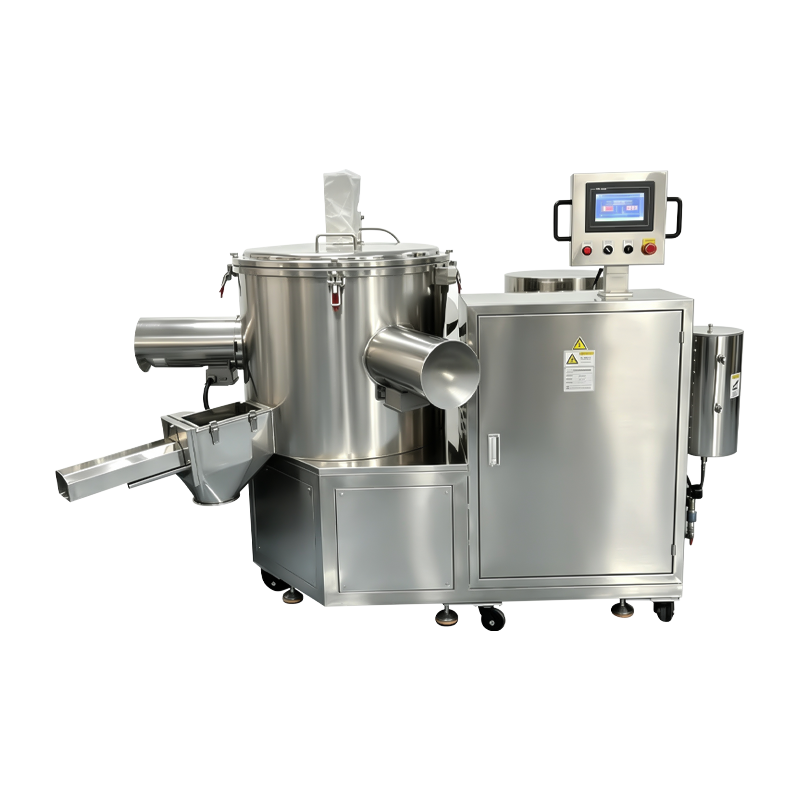
| Mixing | High-shear mixer with chopper | Pigment dispersion, binder distribution, oil-phase uniformity |
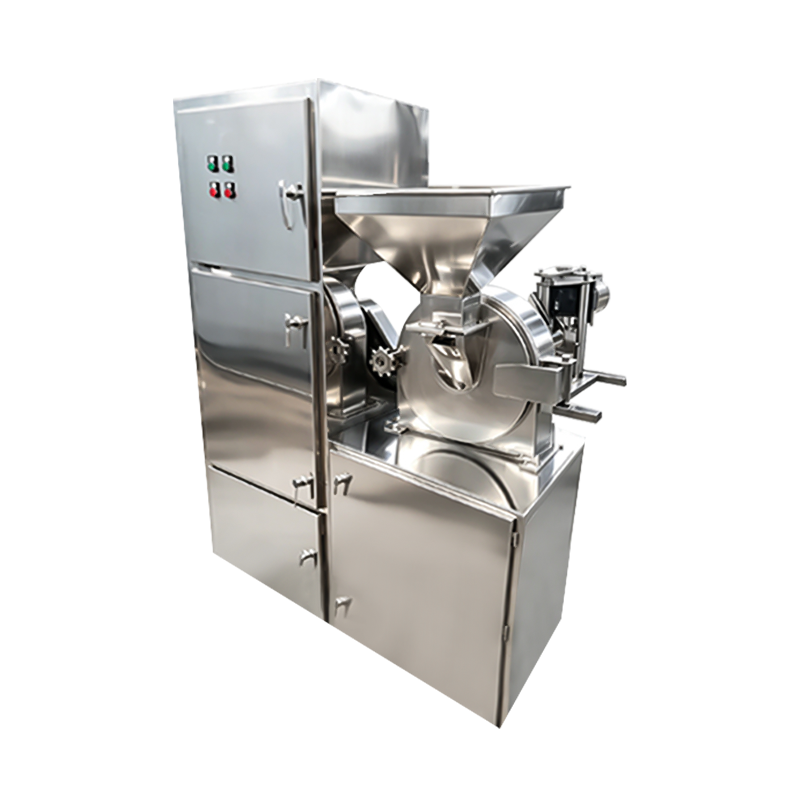
| Pulverizing | Superfine pulverizer with screw feeder | Particle size distribution, agglomerate breakdown |
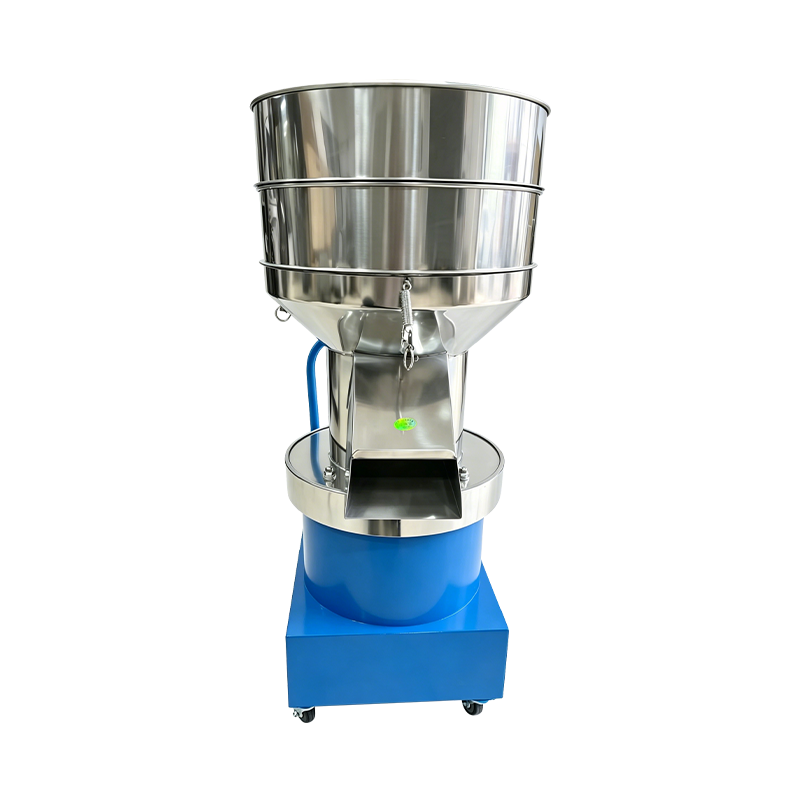
| Sieving | Vibrating sieve machine | Removal of oversize particles, consistent flowability |
| Pressing | Automatic powder pressing machine | Compact hardness, surface finish, fill weight |
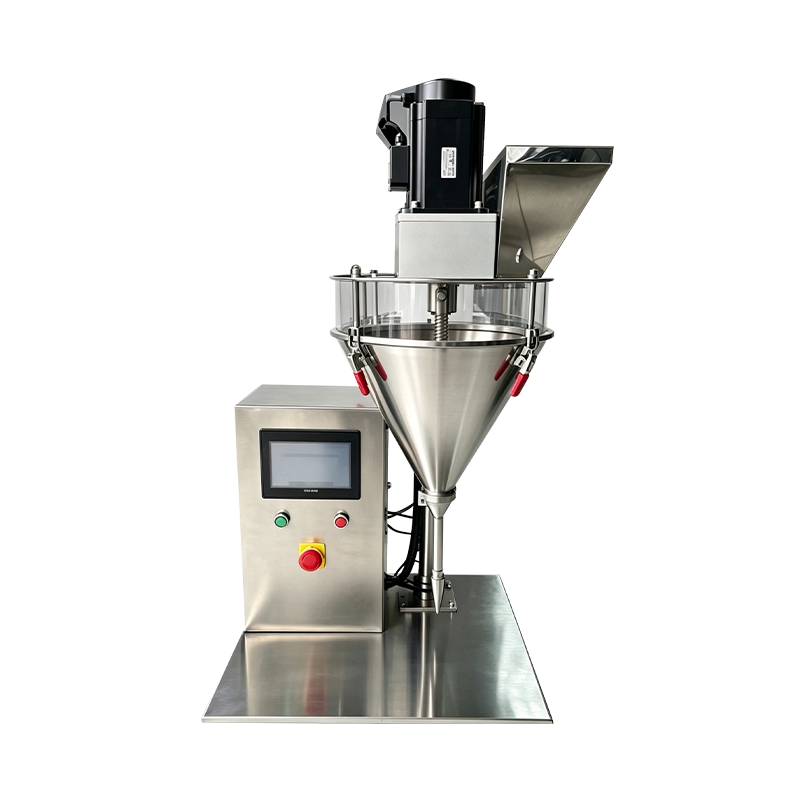
| Pan loading and filling | Automatic pan loader, auger filler | Assembly efficiency, fill accuracy |
Powder that reaches the pressing station with consistent particle size and moisture content produces compacts with uniform hardness and surface appearance. No amount of pressing pressure can fix a poorly mixed batch.
Core Equipment That Determines Powder Makeup Quality
Mixing and pressing are the two stages where most powder makeup quality is gained or lost, and both depend on dedicated processing machines rather than on formulation adjustments alone.
Mixing: Uniform Color Starts Inside the Mixer
A high-shear powder mixer with triple chopper blades serves two purposes at once: the main blades circulate the powder mass while the chopper breaks down pigment agglomerates in real time. An integrated oil-spraying system distributes binders and wetting agents evenly through the batch, which is the difference between a smooth compact and one that crumbles at the edges.
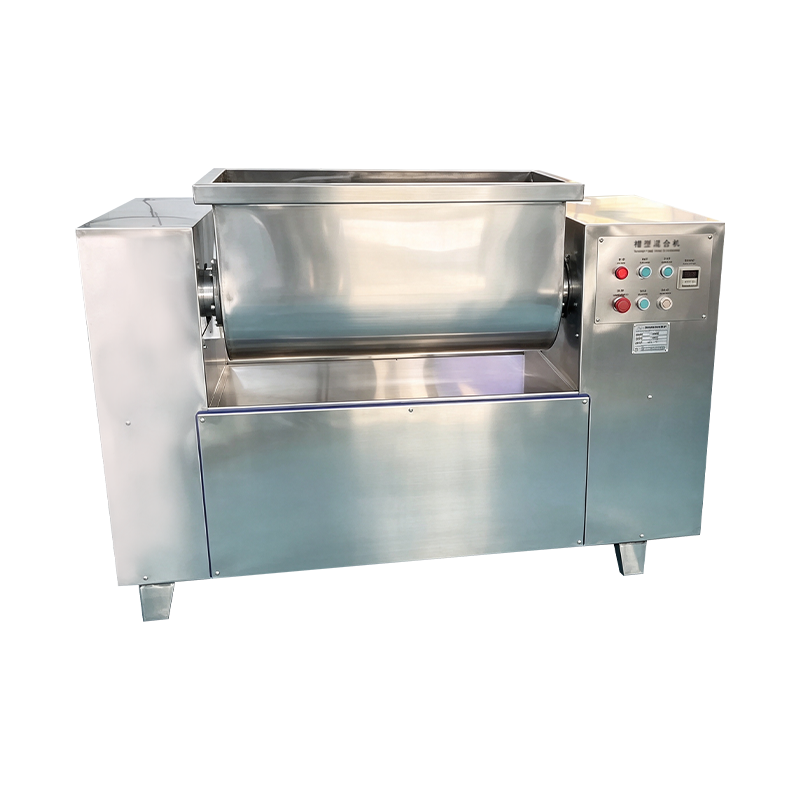
Batch time is where the improvement becomes visible. A 100 L high-shear mixer with a triple chopper can process a 60-80 kg powder batch in 10-15 minutes, while a conventional ribbon blender commonly needs 30-40 minutes for the same dispersion quality.
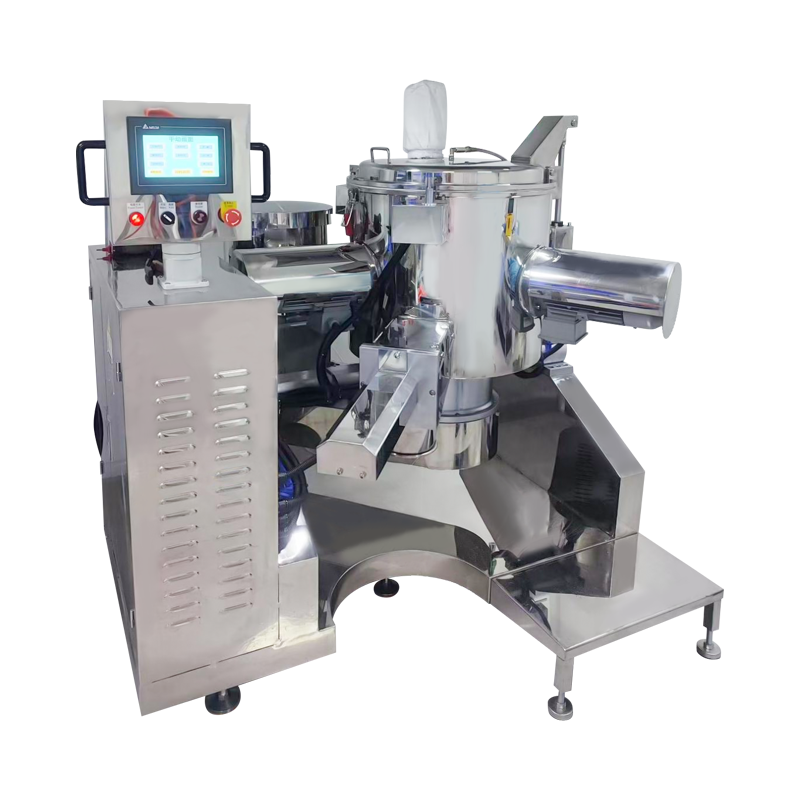 100L Triple-Chopper High-Speed Powder Mixer with Oil Spraying and Cooling SystemsThis 100L mixer combines high-shear mixing with pulverizing for cosmetic powders, featuring Siemens motors, Delta PLC, automatic lid and discharge, plus oil spraying and cooling. It suits pressed powder and eyeshadow batches, directly addressing the batch time improvements mentioned above.View Product →
Pressing: The Final Quality Gate
The pressing machine determines compact hardness, surface finish, and fill weight. Fully automatic models control pressing pressure, dwell time, and feeding depth with programmable parameters, which keeps the finished product consistent across long runs. See the full explanation of how automation improves efficiency across the cosmetic powder production process for a closer look at the mechanism behind this consistency.
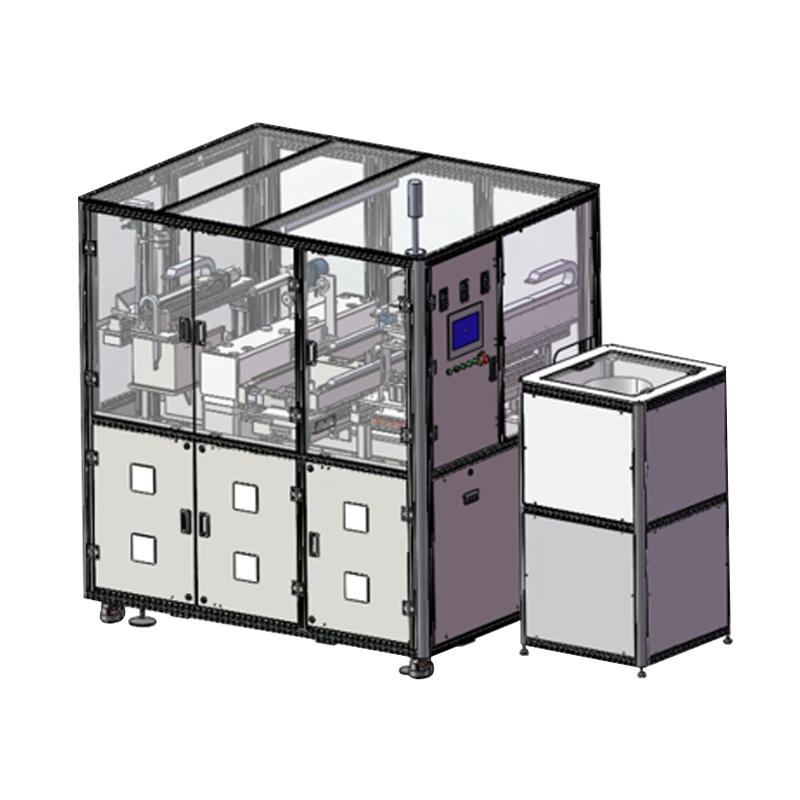 Fully Automatic Cosmetic Powder Pressing Machine with HMI and WiFi MonitoringThis automated press integrates pan loading, dosing, clearing, pressing, and discharge in one line, supporting up to 49 cavities per mold. Its HMI allows one operator to run two units, while WiFi enables remote diagnostics, supporting consistent fill weight control.View Product →
When the mixer, pulverizer, and sieve deliver a consistent powder feed, an automatic pressing machine can hold fill weight variation within 0.03 g on a 9 g compact.
Measurable Gains: Output, Consistency, and Scrap Rates
Automating powder processing raises per-shift output, tightens batch-to-batch consistency, and reduces scrap by enough margin to change the unit cost structure of a powder makeup line.
3x Per-shift output when moving from semiautomatic pressing to a fully automatic press with auto feeding
Below 2% Reject rate reported on integrated powder lines, compared with 6-9 percent on manually handled lines
0.03 g Fill weight control typical of automatic pressing with consistent powder feed
The gains compound across the line. Faster mixing shortens the batch cycle. Consistent powder feed reduces press adjustments. Fewer defects cut rework, which in turn frees operators for other stations. The result is not a single efficiency improvement but a chain of them.
Percentage of batches meeting specification: manual vs automated processing
Manual Automated
Mixing uniformity
Color within specification
First-pass yield
Typical ranges reported by OEM powder lines before and after automation projects.
Every 1 percent reduction in scrap keeps about 160 additional compacts per eight-hour shift on a line running 2,000 compacts per hour.
Is a Fully Integrated Line Worth the Investment?
A fully integrated powder makeup processing line delivers a lower cost per compact than standalone machines once daily volume exceeds roughly 15,000 compacts, because it eliminates handling damage, rework, and the additional labor required between stations.
Standalone machine setup
- Lower initial capital, typically 60-70 percent of an integrated line
- Five to seven operators per line for transfer and feeding
- Manual transfer between stages creates damage and rework risk
- Changeover typically takes about 90 minutes
- Cost per compact stays higher as volume grows
Integrated automated line
- Higher initial investment, offset by lower unit cost
- Two to three operators per line
- Automated transfer keeps powder and compacts contained
- Changeover takes 30-45 minutes with saved recipe settings
- Cost per compact drops above roughly 15,000 units per day
An integrated line does not just press compacts faster. It eliminates the quality loss that happens every time powder or a finished compact is transferred by hand.
Steps to Configure a Powder Makeup Processing Line
Configuring a powder makeup processing line starts with the formulation and target output, then maps each process step to a machine with the right capacity, automation level, and changeover flexibility.
- Define batch size and per-shift output target; these numbers set the capacity for every downstream machine.
- Match mixing and pulverizing capacity so a batch is never waiting at the next stage.
- Select the pressing automation level: semiautomatic for pilot runs, fully automatic for sustained production volume.
- Integrate sieving, automatic pan loading, and filling so compacts move from press to package without manual handling.
- Validate the whole sequence with a pilot trial on the actual formulation before committing to a full line.
A pilot trial with a 50-100 kg batch on the selected machines reveals whether the formulation needs a higher-shear mixer, a finer sieve mesh, or a longer pressing dwell time before the full line is commissioned.
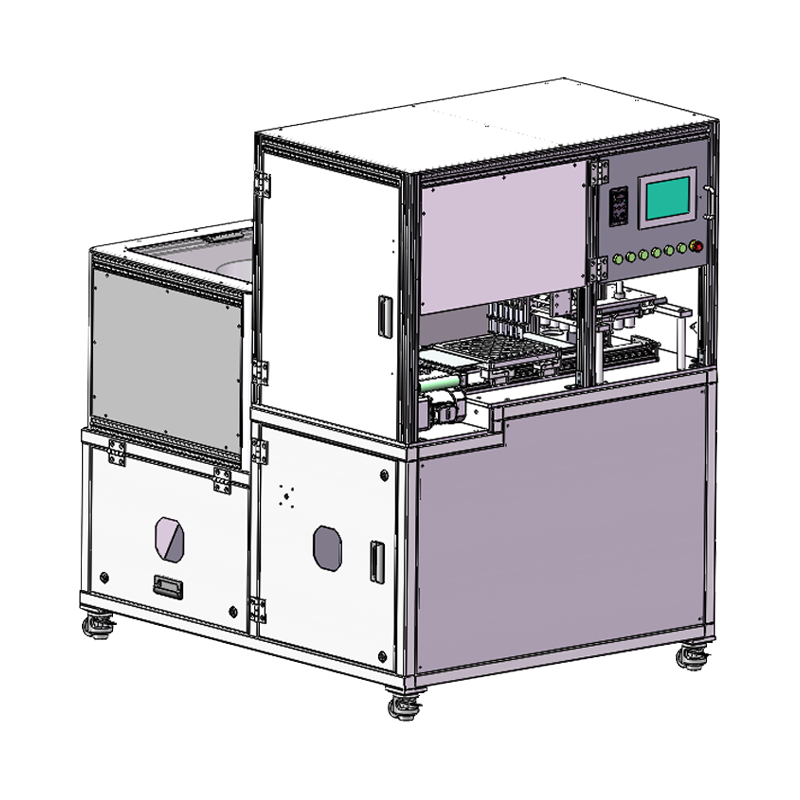 Fully Automatic Aluminum Pan Loading and Feeding Machine for Compact CosmeticsThis machine automates pan alignment, sorting, and high-speed loading with up to 49 cavities and 3-6 cycles per minute, replacing about three manual operators. It maintains a 99% yield and synchronizes with downstream filling and pressing units for continuous production.View Product →
Frequently Asked Questions
What is the most critical machine in a cosmetic powder processing line?
The pressing machine is usually named as the most critical because it is the last mechanical step before packaging, but mixing determines whether the press can perform at all. A line with a high-quality automatic press and weak mixing will still produce streaked compacts.
How much can automation reduce scrap in pressed powder production?
OEM lines that move from manual transfer to automated mixing, sieving, and pressing commonly report first-pass yield rising from roughly 92 percent to 97 percent or higher. On a line producing 2,000 compacts per hour, that difference amounts to thousands of additional saleable units per week.
Can an existing powder makeup line be upgraded incrementally?
Yes. Many manufacturers start with an automatic powder pressing machine and automatic feeding, then add pulverizing, sieving, and pan loading as volume grows. Pressing delivers the fastest measurable return because it directly controls compact quality.
How long does commissioning take for an automated powder line?
Most integrated powder lines are commissioned in 4 to 8 weeks, including installation, operator training, and process validation, depending on the number of stations and the complexity of the formulation.
Recommended NEWS:
Powder Processing Challenges in Cosmetic Manufacturing and How to Address Them
How Automation Improves Efficiency Across the Cosmetic Powder Production Process
How Fully Automatic Pan Loading Machines Improve Cosmetic Powder Pressing Lines
How to Build an Efficient Production Line for Pressed Powder Cosmetics
How Circulation Drying Ovens Improve Pressed Powder Production Quality
How Compact Powder Pressing Machines Optimize Small-Batch Cosmetic Manufacturing
Related products
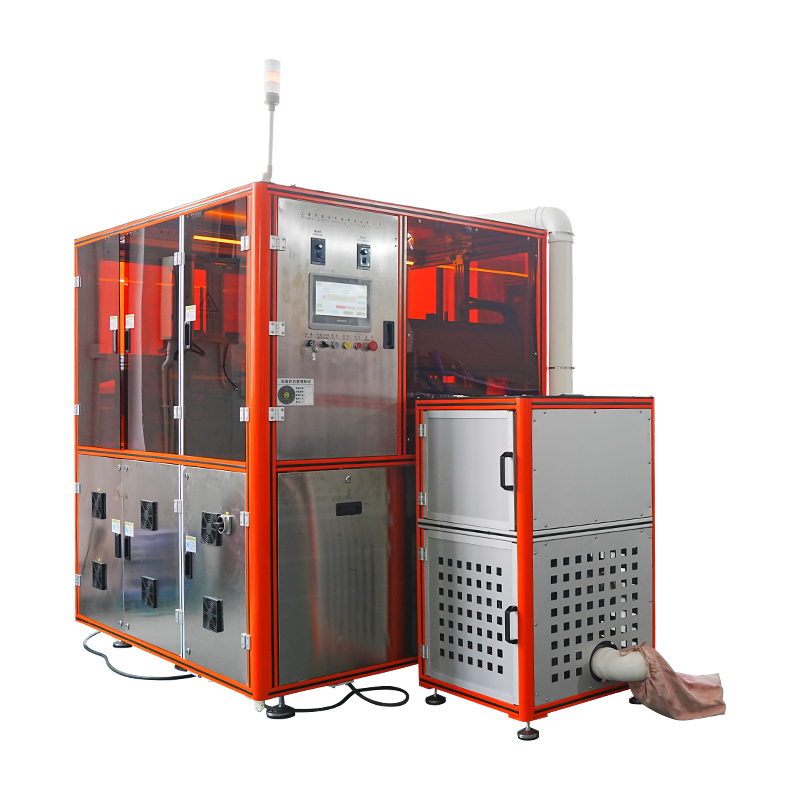
Copyright © Shanghai Qimeida Machinery Technology Co., Ltd. All Rights Reserved.
Custom Professional Cosmetic Machinery Manufacturers
