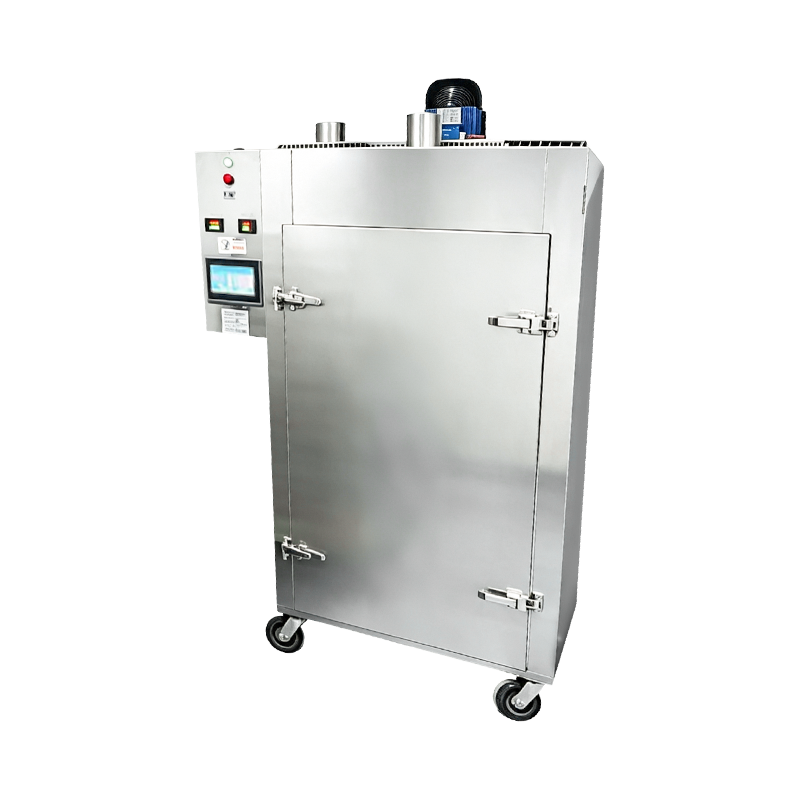
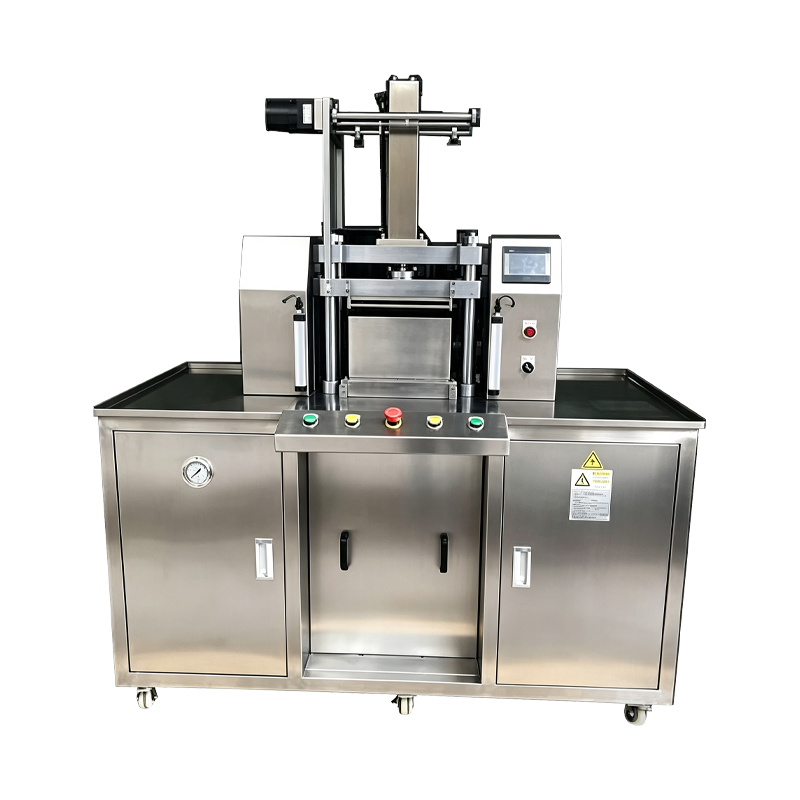
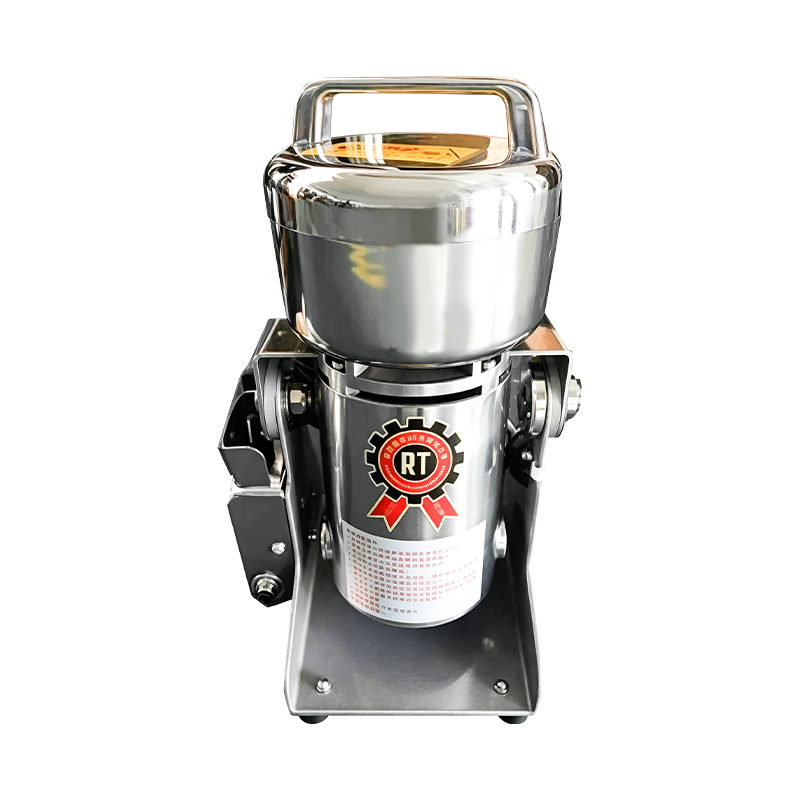
In a cosmetics OEM plant in Guangzhou, 12 percent of pressed powder compacts were being rejected for edge chipping and mottled color. Trays near the oven door finished drying in 90 minutes, while trays at the back of the same batch took 140 minutes. That imbalance is a clear warning sign of an uncontrolled drying stage, and it is exactly the problem circulation drying ovens solve on automated pressed powder lines.
A circulation drying oven is a forced-air thermal processing unit that continuously recirculates conditioned air through the drying chamber to keep temperature and moisture uniform across every tray position.
What Is a Circulation Drying Oven and Why Does Pressed Powder Need One?
A circulation drying oven is a forced-air thermal processing unit that continuously recirculates conditioned air through the drying chamber, holding tray-to-tray temperature differences to within roughly 2 to 3 degrees Celsius. When freshly pressed powder compacts leave the compression station, they still contain residual solvent or moisture that must be removed before the pans can be labeled and packed. Static hot-air ovens rely on natural convection, which creates hot zones near the heating elements and cold zones near the door and exhaust. A circulation drying oven uses motorized impellers and a ducted air path to push conditioned air evenly across every tray, making the drying rate predictable batch after batch.
Static hot-air ovens versus circulation drying ovens across key processing parameters.
| Parameter |
Static Hot-Air Oven |
Circulation Drying Oven |
| Temperature spread across trays |
8 to 12 degrees Celsius |
2 to 3 degrees Celsius |
| Drying time variance between trays |
30 to 50 percent |
5 to 10 percent |
| Air movement |
Natural convection only |
Forced, ducted recirculation |
| Moisture differential between trays |
Up to 2.0 percent |
Below 0.5 percent |
Every 5 degree Celsius increase in tray-to-tray temperature spread translates into measurable differences in binder flow, surface finish, and final compact hardness.
Uniform Moisture Distribution Starts with Forced Air, Not Heat Alone
Circulation drying ovens remove moisture from pressed powder at a uniform rate because forced air reaches the top, bottom, and edges of each pan at the same velocity and temperature. In a pressed powder compact, the liquid phase that carries binder, pigment, and filler must evaporate evenly. When the surface dries faster than the interior, a skin forms and traps solvent below it, producing cratering or soft cores that collapse during final inspection. Forced circulation breaks the static boundary layer above the powder bed and accelerates evaporation on a microscopic scale, so each compact ends up with consistent hardness from its center to its rim.
Static oven behavior
- Hot air rises and pools near the top of the chamber
- Door-side trays stay several degrees cooler
- Surface skinning traps solvent below the powder bed
- Moisture variance across a batch reaches 2 percent
Circulation oven behavior
- Ducted air reaches every tray at the same velocity
- The full chamber stays inside a 2 to 3 degree Celsius band
- Evaporation proceeds uniformly across the powder bed
- Moisture variance across a batch stays below 0.5 percent
Tray-to-tray moisture differential below 0.5 percent is the operating target. Static ovens commonly run at four times that level.
Binder Activation Depends on Predictable Temperature Gradients
Press powder binders, including magnesium stearate, zinc stearate, and squalane, become fully and evenly activated only when every tray in the oven experiences the same heating profile. As temperature rises, binder particles soften and spread over pigment and filler particles, creating the film that locks the compact together during pressing. Trays that run hot over-melt their binders and yield brittle compacts. Trays that run cool leave binders under-activated and produce chalky surfaces that crumble under light pressure. The tight temperature band of a circulation drying oven lets production teams set one target tray temperature and trust that the whole batch reaches it within minutes of each other.
- Below the optimum band: incomplete binder film, powdery surface, low compact strength
- Inside the optimum band: uniform film formation, maximum crush strength, smooth finish
- Above the optimum band: binder migration to the surface, sticky finishes, brittle edges
Consistent binder activation is the difference between a pressed powder pan that survives international shipping and one that crumbles in the consumer's hand.
Measurable Defect Reduction in Cracking, Chipping, and Mottling
Manufacturers that replace static ovens with circulation drying ovens report a 20 to 30 percent reduction in total pressed powder defects, with the largest gains in edge cracking and color mottling. The mechanism is straightforward: when moisture is pulled out evenly and binders set predictably, defects that originate in the drying stage mostly disappear. Edge cracking drops because the rim of the pan is no longer drier or wetter than the center. Mottling disappears because no pigment dries faster than its neighbor; uniform airflow prevents the color separation that uneven evaporation produces.
Defect rates on a pressed powder line: static oven versus circulation drying oven
Static hot-air oven Circulation drying oven
Edge cracking 8% 2.5%
Color mottling 5% 1.5%
Surface cratering 3.5% 1%
Total rejects 12% 4%
In documented OEM production trials, total rejects dropped from 12 percent to 4 percent after the switch, a two-thirds reduction in scrap.
Energy Efficiency and Shorter Cycles Cut Cost per Batch
Because circulation drying ovens reuse heated air instead of venting it to the room, they consume 20 to 35 percent less energy while cutting drying time by 15 to 40 percent. The recirculation path returns warm, dry air to the heating elements, so the oven does the same work with a fraction of the energy input of a once-through design. At the same time, plant managers no longer need to hold a batch until the slowest tray dries. The total drying cycle shortens, and a line running 20,000 compacts per shift gains extra capacity without occupying another square meter of floor space.
20 to 35% lower energy consumption per batch
15 to 40% shorter drying cycles
5 to 10% drying time variance between trays
20%+ extra line capacity per shift
A 25 percent reduction in drying cycle time adds roughly one full batch of pressed powder compacts to an eight-hour shift, with no additional labor.
How to Specify a Circulation Drying Oven for Pressed Powder
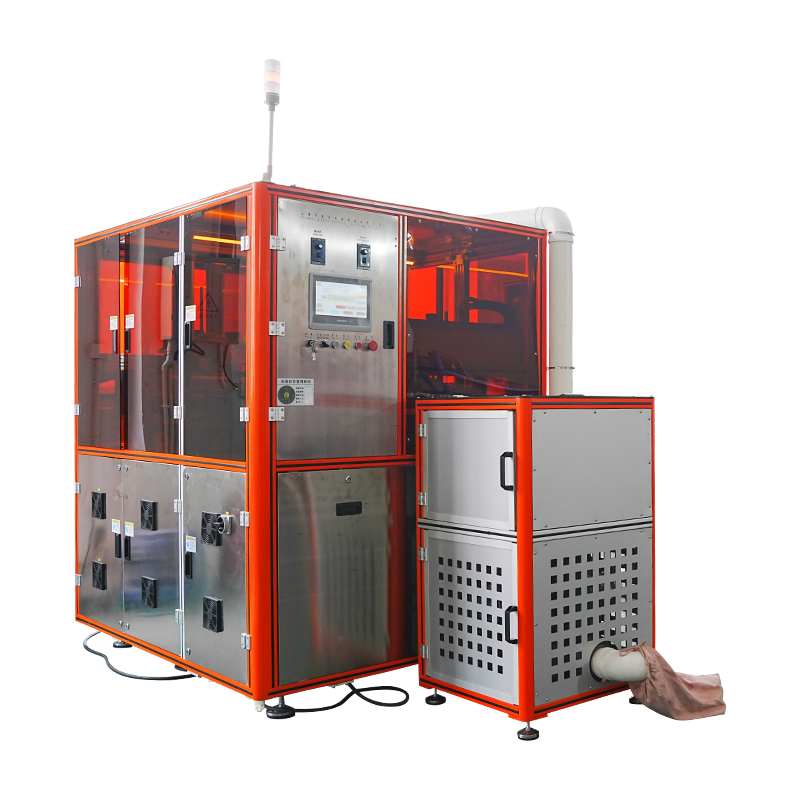
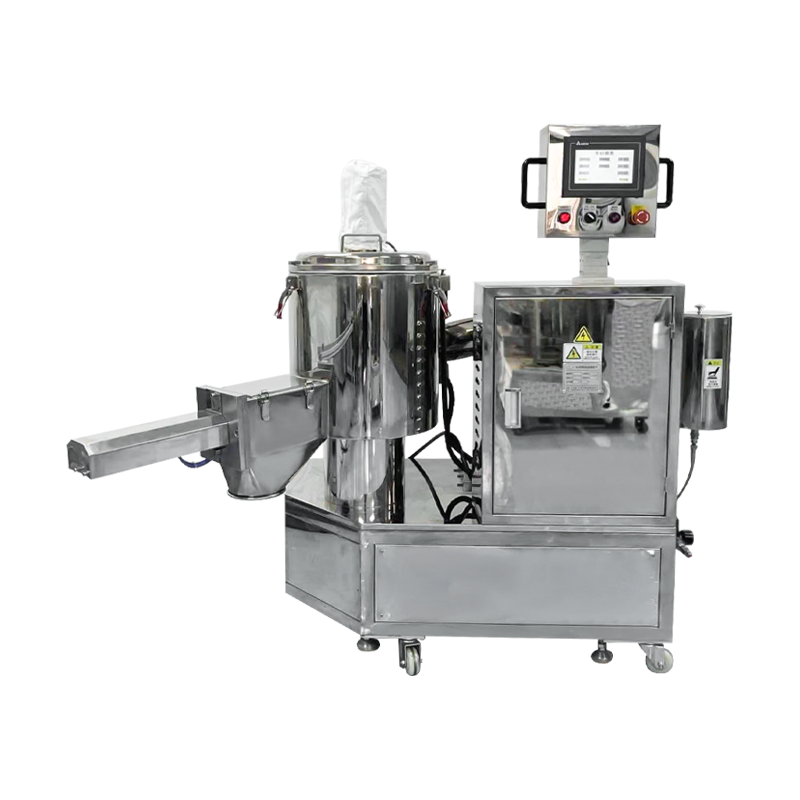
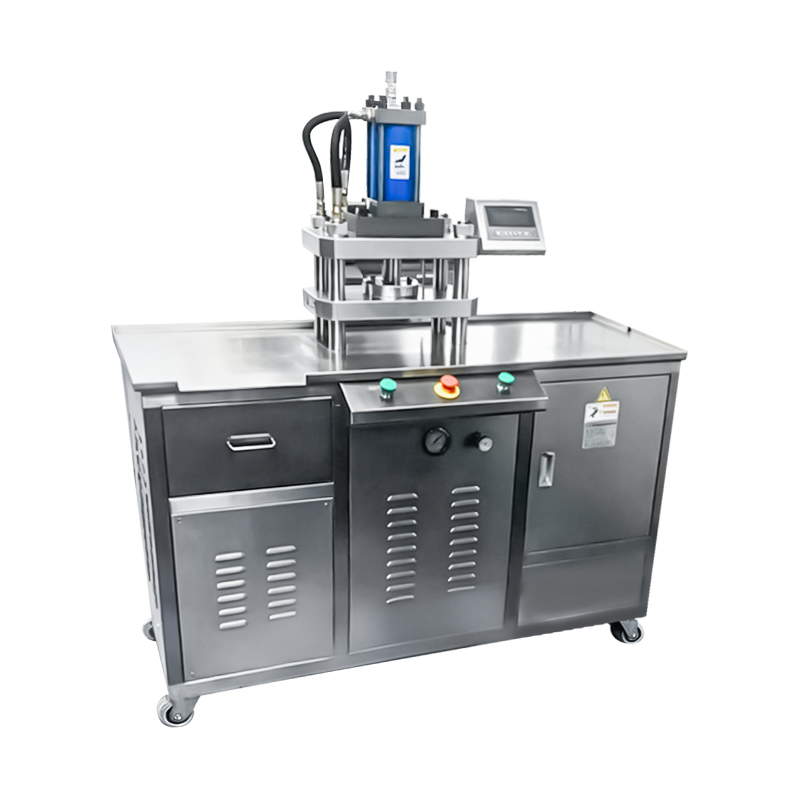
When evaluating a circulation drying oven for a pressed powder line, engineering teams should prioritize four specifications: air volume per chamber volume, temperature uniformity, tray loading density, and programmable drying profiles. Suppliers such as Shanghai Qimeida Machinery Technology Co., Ltd. build fully automated powder pressing lines and routinely match circulation drying ovens to customer formulations, tray sizes, and shift output targets. A practical specification process follows four steps.
- Measure your current batch variance. Log tray temperatures at multiple chamber positions in your existing oven for at least one full production week.
- Define the moisture target. Powder feed moisture, binder composition, and pan depth determine the drying curve that the oven must follow.
- Match airflow to pan geometry. Confirm that the duct layout directs air across the pan surface rather than around the chamber perimeter.
- Require programmable multi-stage profiles. Ramp, hold, and cool stages protect heat-sensitive pigments and binders from thermal shock.
A correctly specified circulation drying oven typically repays its capital cost through defect reduction alone within 12 to 18 months on a two-shift line.
Frequently Asked Questions About Circulation Drying Ovens
Q1. How long do pressed powder compacts typically take to dry in a circulation drying oven?
Typical drying cycles range from 60 to 180 minutes, depending on pan depth, pigment density, and binder formulation. Circulation drying ovens cut that time by 15 to 40 percent compared with static ovens because moving air removes moisture from the powder surface much faster than natural convection.
Q2. Can one circulation drying oven handle different powder formulations?
Yes, provided the oven has a programmable controller with multi-stage drying profiles. A pigment-heavy loose powder may need a slow low-temperature ramp, while a wax-based compact tolerates a higher hold temperature. The same oven can execute both profiles in sequence across different batches.
Q3. What is the optimal drying temperature for pressed powder?
Most pressed powder formulas dry best between 55 and 75 degrees Celsius. Higher temperatures over-melt binders and cause pigment migration; lower temperatures leave residual solvent that weakens the compact. The exact optimum depends on the binder system in the formula.
Q4. How does a circulation drying oven compare with vacuum drying for pressed powder?
Vacuum drying suits solvent-sensitive formulas but carries a higher capital cost and slower batch turnover. For standard talc, pigment, and binder pressed powders, circulation drying delivers equivalent final quality at roughly half the equipment cost and with faster cycles.
All figures in this article are production-line data from pressed powder OEM facilities; exact results depend on formulation, tray loading, and ambient conditions.

 English
 Pусский