
 English
 Pусский
Key Equipment for a Complete Cosmetic Powder Manufacturing Line: 2026 Guide
Time: Sep 05, 2026
Content
- 1 What Belongs in a Complete Cosmetic Powder Production Line?
- 2 Mixing and Size Reduction Equipment: The Quality Foundation
- 3 Pan Filling and Pressing: The Core of the Line
- 4 Auxiliary Equipment That Keeps a Powder Line Stable
- 5 Quality Control Equipment and Tolerance Checks
- 6 Right-Sizing the Line to Your Production Target
- 7 FAQ: Cosmetic Powder Manufacturing Equipment
Planning a pressed powder production line, for foundation, blush, eyeshadow, or bronzer, is a capacity exercise before it is a machinery exercise. You start with a target output in pans per minute, then work backward through each process stage to define the equipment chain. A line that looks complete on paper but mismatched in throughput will keep the press idle while the mixer starves it.
A complete cosmetic powder manufacturing line spans seven stages: raw material weighing, premixing, pulverizing, blending, pan filling, pressing, and finishing. Missing or undersized equipment in any one stage creates measurable losses, including slower cycle times, higher rejection rates, more manual handling, and inconsistent product quality. This guide identifies the key equipment in each stage, with practical specifications for planning a balanced line.
What Belongs in a Complete Cosmetic Powder Production Line?
Every pressed powder line follows the same process logic, so you can plan equipment around the process sequence rather than around individual products.
| Stage | Core Equipment | Typical Specification | Effect on the Line |
| 1. Weighing | Automatic dosing and weighing station | +/- 2 g accuracy on micro ingredients | Prevents batch rejects |
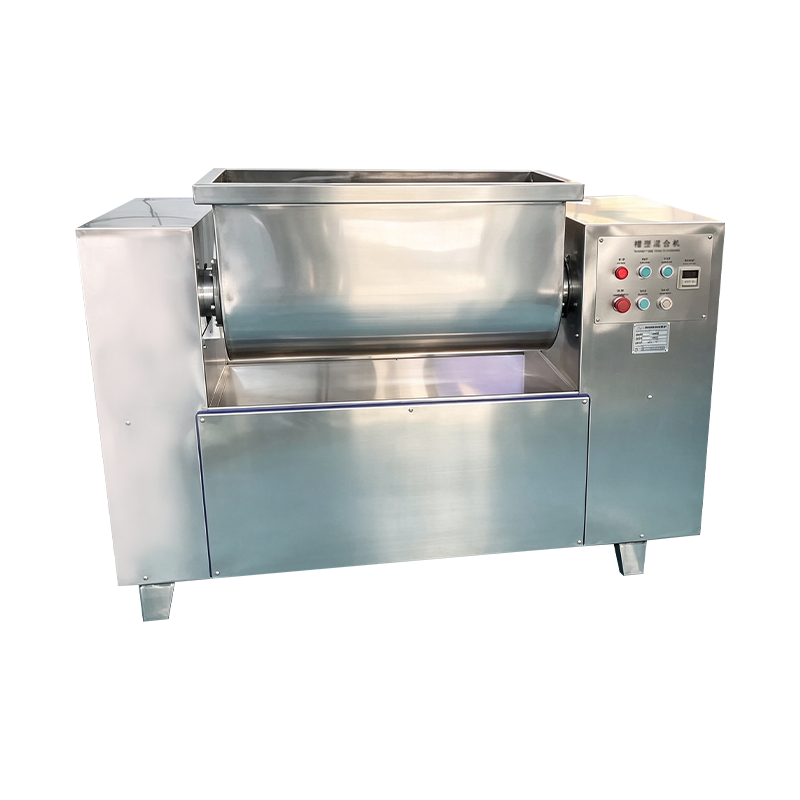
| 2. Premixing | Ribbon mixer or high-shear mixer | 100 to 500 L working volume | Uniform pigment dispersion |
| 3. Pulverizing | Air jet mill or pin mill | 15 to 25 microns average particle size | Smooth pressing, low breakage |
| 4. Blending | V blender or cone blender | 200 to 1000 L batch size | Final color consistency |
| 5. Pan filling | Multi-head powder filling machine | 40 to 60 pans per minute | Stable fill weight |
| 6. Pressing | Hydraulic turret powder press | 5 to 15 ton pressing force, multi-cavity | High output, fewer cracks |
| 7. Finishing | De-dusting, wiping, assembly conveyor | Inline with the press | Clean product presentation |
A line is only as strong as its pulverizing and blending stage. If powder reaches the press with inconsistent particle size, no press setting can fix the resulting cracks, rough texture, or color streaks.
Mixing and Size Reduction Equipment: The Quality Foundation
Premixing is where formulation quality is decided. A 500-liter ribbon mixer completes a foundation batch in eight to twelve minutes, and the shear level it applies determines how evenly pigments and binders disperse.
- Ribbon mixer: gentle blending for color uniformity while preserving pigment structure.
- High-shear mixer: faster dispersion for hydrophobic and harder-to-wet pigments.
- Air jet mill: reduces particle size to the 15 to 25 micron range without heat buildup.
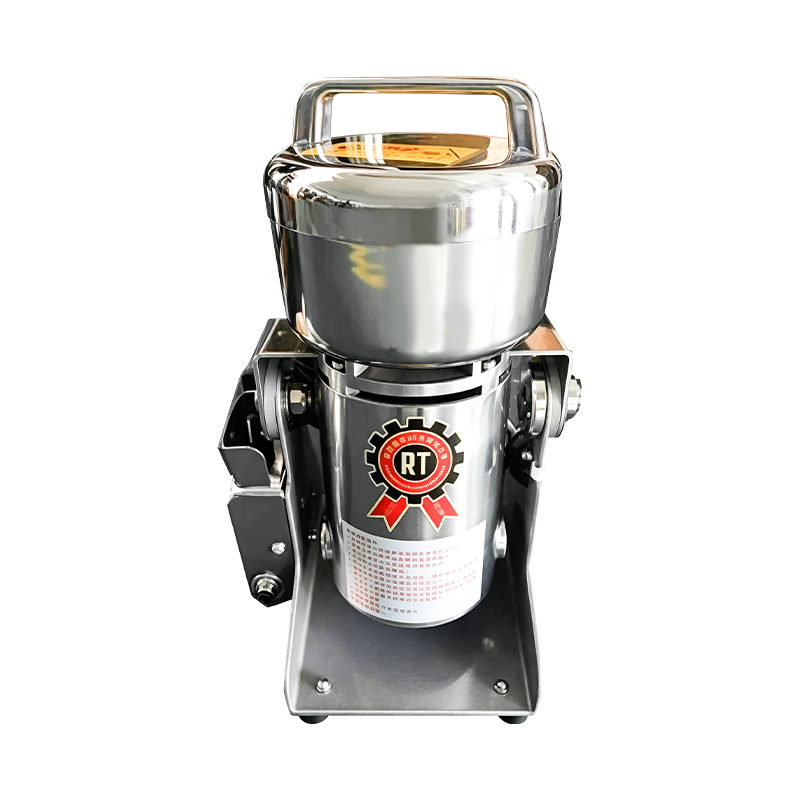
- Pin mill: a cost-effective alternative that adds some heat, best for stable formulas.
- Sifter or screen: removes oversized particles and foreign matter before filling.
Particle size is the most controllable variable between mixing and pressing. Compact powders typically press well at a d50 of 20 to 30 microns. Below 10 microns the powder agglomerates; above 60 microns the texture becomes visible on the pressed cake.
Pan Filling and Pressing: The Core of the Line
Pan filling meters the exact powder volume into each pan, and the powder press converts that loose fill into a compact with a defined hardness and surface finish.
Turret Powder Press
Multi-cavity rotary design running at 40 to 60 pans per minute. Continuous feed keeps the line moving and suits annual volumes above 5 to 10 million pans. Press force typically ranges from 6 to 15 tons depending on the compact density required.
Single-Station Press
Produces 8 to 15 pans per minute with tooling changes in minutes. Lower capital cost and high flexibility make it the right choice for development batches, short runs, and frequent color changes.
- Set the fill depth and confirm the target fill weight on the dosator.
- Adjust punch travel speed to prevent powder blow-by during compression.
- Set compression force and dwell time according to the formula hardness.
- Tune ejection speed to avoid edge chipping and surface grazing.
A 10-cavity turret press running at six cycles per minute produces 60 pans per minute, roughly 28,000 pans in an eight-hour shift. That rhythm requires filling, inspection, and packing stations matched to the same speed.
Auxiliary Equipment That Keeps a Powder Line Stable
Auxiliary systems rarely appear in line diagrams, yet they drive uptime and product quality more than any single production machine.
- Explosion-proof dust collection: captures fine powder, reduces explosion risk, and enables material recovery.
- Humidity control: keeps the packing area below 50 to 55 percent relative humidity to protect hygroscopic raw materials.
- Compressed air supply: feeds pneumatic actuators and powers blow-off cleaning of molded pans.
- Static grounding and ionization: prevents static charge from causing fill-weight drift and powder cling.
- Wash-in-place cleaning station: shortens changeover time between colors and formulas.
Quality Control Equipment and Tolerance Checks
Quality control equipment operates inside the line, not in a separate laboratory. Inline checks catch defects before they accumulate in the hopper or reach the packing station.
| QC Station | Measurement | Typical Tolerance |
| Check weigher | Fill weight | +/- 2 percent of target |
| Crack and chip sensor | Surface integrity | 100 percent inline inspection |
| Metal detector | Ferrous and non-ferrous contamination | Below 0.7 mm ferrous, below 1.2 mm stainless |
| Hardness tester | Compact hardness | 3 to 8 kg indentation force, sampled |
A well-instrumented line keeps the reject rate below 1.5 percent. With inline QC, you can trace every reject to a specific station instead of discounting whole production lots.
Right-Sizing the Line to Your Production Target
Equipment selection starts with the annual production target, not with a machine brochure. Manufacturers such as Shanghai Qimeida Machinery Technology Co., Ltd. build automated powder pressing solutions matched to a client's product mix and capacity.
5-15 t
Typical pressing force range for compact powder cosmetics
40-60
Output range in pans per minute for a mid-size turret press
28,800
Pans per eight-hour shift at 60 pans per minute
<1.5%
Target line reject rate with full inline QC
Typical investment share by equipment group in a complete powder manufacturing line.
Powder press machine
32%
Pan filling system
18%
Mixing and size reduction
16%
Auxiliary and dust collection
14%
QC and inspection
10%
Assembly and packing
10%
Investing wisely means balancing the press budget against the mixing and milling budget. The press decides output, but the mixer and mill decide whether the product is marketable. Define particle size and moisture specifications first, then match pressing capacity to the production target.
FAQ: Cosmetic Powder Manufacturing Equipment
Here are the most common questions plant managers and project teams ask when planning a pressed powder manufacturing line.
For most new lines, a 15 to 20 percent capacity buffer above the annual target absorbs color changeovers, maintenance stops, and future product growth.
What machines make up a cosmetic powder manufacturing line?
A complete line includes a weighing station, ribbon or high-shear mixer, air jet or pin mill, sifter, multi-head pan filler, hydraulic powder press, finishing conveyor, check weigher, metal detector, and dust collection system.
What causes pressed powder to crack or crumble?
Cracking usually traces to coarse or inconsistent particle size, low binder content, or a press cycle with insufficient dwell time. Ejection speed also matters because ejecting too fast tears the edges of the cake. Correcting the grind curve and adjusting the press cycle resolves most cases.
How do you choose between a turret press and a single-station press?
Choose a turret press when annual volume exceeds roughly 5 to 10 million pans and product changeovers are infrequent. Choose a single-station press for development batches, short runs, and frequent color changes, then move to turret capacity once the formula is locked.
How do you calculate the line capacity you need?
Work backward from the annual target volume divided by operating days and shift hours to get the required pans per minute. The press defines that rate, the mixer batch size must keep it fed, and the filler and QC stations must keep pace. Add a 15 to 20 percent buffer for color changes and maintenance.
Related products
Copyright © Shanghai Qimeida Machinery Technology Co., Ltd. All Rights Reserved.
Custom Professional Cosmetic Machinery Manufacturers
